A subject as rich as sexuality would surely be discussed in theory on gender. Students studying social sciences would surely come across chapter deconstructing the meaning of sex as a social behavior. It turns out that not so much, in fact. Our assigned texts did a fantastic job at showing gender in social institutions, however there is no topic dealing exclusively with human sexuality. The issue of the orgasm, male and female, is not tackled either although it stands at the center of our definition of sexual activity.
Mentions of sexuality are present in Kimmel's book in various sections, however there is no concentrated chapter looking into the matter. The Weitz reader has some chapters that almost touch upon the issue of female orgasm and sexual pleasure, however, the perspective of these articles is more specialized in looking at other issues in sexuality, such as breasts, the body, black femininity and sexuality and subcultures.
The lack of information on female orgasms in the literature, in itself, seems to be a bigger statement that may emphasize that even scholars have a difficult time stepping out of ideology.
It also raises questions about sexual education, especially in a country where sex ed is not always offered or is not medically accurate. The missing conversation on the topics of sexuality and sexual pleasure carries on the notion that sexual activity is centered around reproduction, reinforcing the male-dominated heteronormative views of society.
References
Kimmel, Michael S. The Gendered Society. New York: Oxford University Press, 2010.
Weitz, Rose, and Samantha Kwan. The Politics of Women's Bodies: Sexuality, Appearance, and Behavior. 4th ed. New York: Oxford University Press, 2014.
Showing posts with label society. Show all posts
Showing posts with label society. Show all posts
Tuesday, December 16, 2014

Course Presentation
Below is the link to our course presentation. This is the collective work of all four authors, enrolled in Sociology of Gender at Clark University in Fall 2014.
Presentation link
The presentation is public and viewable to the public.
Presentation link
The presentation is public and viewable to the public.
Social and Behavioral Constructions of Female Sexuality
This paper critiques some theories of sexuality that emerged in the second half of the 20th century.
KINSEY remains the most controversial and comprehensive source of information for female sexuality, however the authors note that male biases are present in the research (Miller and Fowlkes, 785). The issue with Kinsey's work is that it employs gendered double standards. While he is critical of the distinctions between female and male sexual activity which disproportionately inhibits "women's sexual activity outside of marriage", he does encourage coitus although it is significantly less frequently a source of orgasmic response for women (Miller and Fowlkes, 785). Although he acknowledges that penetrative sex is not that pleasurable for females, they are told to engage in it (both premarital and marital sex) to help the male reach his physiological response (785).
"A similar bias is revealed in Kinsey's interpretation of his finding that female sexual unresponsiveness is a major factor in women's premarital coital reluctance. A man, of course, may reach orgasm through coitus without doing much at all to arouse or stimulate response in his female partner. Rather than portraying men as the victims of women's unresponsiveness, it would be fairer to suggest that women may be victimized by men's self-interest and failure to show the consideration necessary to incorporate female orgasm into the coital experience." (785-6)
Another traditional bias he holds is stating that an orgasm cannot be the "sole criterion" for female pleasurable activity, as many women find satisfaction knowing their partner enjoyed the contact and that she "contributed to" his pleasure (786). This idea is very similar to the gynecology texts of the 1940s-1970s that maintained a male-oriented perspective with gendered biases in the field of female sexual and reproductive health.
 |
| Alfred Kinsey http://static.businessinsider.com/image/5256ce91eab8ea6d5dbb7257/image.jpg |
The works of MASTERS AND JOHNSON are also presented in this theoretical review. Their contribution to the field is highly significant because their laboratory tests helped recognize the clitoris as a vital part of the female sexual response (787). They described it as a "unique organ in the total of human anatomy. Its express purpose is to serve both as a receptor and transformer of sensual stimuli." (787). Therefore, the passive, sexually unresponsive, unorgasmic woman was equipped with a mechanism specialized solely on pleasure, while the man - the dominant gender in the equation of sexuality - was not. This discovery helped combat the myth of absolute female frigidity: women were not possessing a "lesser sexuality" (787). Moreover, their tests revealed the autonomy of female sexuality, women were experiencing a higher frequency of orgasmic response through "self-regulated mechanical or automanipulative technique" (787). However, the researchers are criticized for insisting that orgasms are the sole meaningful conclusion of a sexual contact, they fail to recognize the cultural importance of other behaviors expressing commitment and intimacy between partners (789).
The introduction of sexuality to the field of sociology would not have been possible without the work of GAGNON AND SIMON. They presented a social interactionist perspective on human sexual behavior which combats the narrow views of Kinsey, Masters and Johnson (789). According to Gagnon and Simon, sexual behavior is a subtype of social behavior and must be analyzed as such; they conclude that this behavior is learned (789). The degree of sexuality can be assessed by consulting the meaning assigned to behaviors "by the actors involved" (789). However, even their work has major setbacks, reflecting a male bias. Their view of adult sexuality emphasizing marriage is considered "limited in scope and shallow in content", not accounting for the inclusion of diversity of sexual expression (790).
Conclusions
The authors conclude by assessing the overall field of sexuality. They believe that a paradigm for female sexuality studies has yet to emerge, but that the studies presented and critiqued have created significant progress despite their limitations (800). The emerging literature helped dispel Freudian ideas about sexual development and reinforced the legitimacy of sexuality as a field of study (800).
References
Patricia Y. Miller and Martha R. Fowlkes, "Social and Behavioral Constructions of Female Sexuality"Vol. 5, No. 4, Women: Sex and Sexuality (pp. 783-800), Summer, 1980
Monday, December 15, 2014
Ideology, Sociology, Sexuality
Reiss's paper analyzes the origin and relation of certain ideas concerning sexuality.
Firstly, he discusses biological differences, based on hormones and states that androgen is related to aggressiveness and sexual motivation and is more present in males than females (Reiss, 273). While the average male has more androgen, there are many differences within sex categories. Also, learning behaviors can alter our hormonal tendencies, showing that in this case nurture wins over nature (Reiss, 273).
Discussing normative behavior, the author analyzes a series of cultural phenomena present in our society.
 |
| http://www.joshreads.com/images/09/11/i091123shoe.gif |
He chooses to start his discussion with the issue of premature ejaculation, noting that our construction of the word references the female orgasm as the central one since the male ejaculation is said to be achieved before this culturally imposed standard (Reiss, 276). The author notes that some South African, male-dominated societies do not have this concept of premature ejaculation. Further on, he asks why the typical response from therapists for men who encountered premature ejaculation isn't to tell them to "bring the female to orgasm orally or manually"(Reiss, 276). He suggests that our current sexual ideology focuses on penetrative, heterosexual intercourse that reinforces traditional sexuality .(Reiss, 276). According to him, our culture is aimed at promoting the male orgasm more than the female orgasm (Reiss, 276). The man is the one who directs the sexual encounters, who initiates, who decides within our cultural sex ideology (Reiss, 276). These hegemonic ideas pressure our bodies, behaviors and attitudes into conforming roles (Reiss, 278).
Our sexual history maintains the myth of absolute virginity, especially during the Puritan period, however, data shows that the a large number of people, men and women, engaged in premarital sex
(Reiss, 278). Male nonvirginity is rarely celebrated and in almost all known cultures most of the males reaching the age of physical maturity are not virgins (Reiss, 278). This has been influenced by men's position of authority in society. Their access to power allowed them to define a sexual code at their advantage, with cultural practices and beliefs enforced by socialization and enculturation.
In the conclusion of his article, Reiss talks about the clash of two opposing ideologies in 1980s American society. Traditional Romantic ideology, emphasizing female sexual subservience and inferiority, is opposing the Modern-Naturalistic view that embraces gender equality and values sexual experiences of both men and women in various expressions (Reiss, 280). He notes that while tolerance and equality in sex were increasing, this ideology of acceptance and equality was not in a dominant position in society, hence unable to change the status quo (Reiss, 281).
Reference:
Ira L. Reiss, "Some Observations on Ideology and Sexuality in America" Journal of Marriage and Family, Vol. 43, No. 2 (pp. 271-283), May, 1981
Women in Gynecology Textbooks
The Scully and Bart piece published in 1973 analyses 27 gynecology texts written from 1943 to 1972 by looking at the viewpoint presented. The scholars conclude that the literature remains oriented towards maintaining the male-dominated, traditional views of sexuality despite the revolutionary findings of Kinsey, Masters and Johnson (Scully and Bart, 1048). Overall, ideas of the centrality of motherhood in women's lives persists, while men as defined by their active sexual responses and desires.
The authors note that "one's perspectives are constrained by one's place in the social structure and thus gynecologists may not adequately represent the interests of the group they are supposed to attend and advocate" (Scully and Bart, 1045). An overwhelming majority of male practitioners would mean that the field lacks a female perspective on what is a female health issue. Considering that 40 years ago, when this article was published, over 90% of gynecologists were male, it is not hard to imagine that their academic writings on the subject reflected their male perspectives and portrayed female sexuality in a way that maintained traditional sex-role stereotypes (Scully and Bart, 1045).
MOTHERHOOD
Gynecology texts from 1943 to 1972 revolve around the idea that women as "anatomically destined to reproduce, nurture" (Scully and Bart, 1045). One text refers to the experience of motherhood as an "urge" (Scully and Bart, 1046). This biological explanation is used to define the role of females in a very strict way which does not allow for possible deviant behaviors and attitudes. In the medical literature, the natural inclination for motherhood is balanced by sexual pleasure, considered "entirely secondary or even absent" (Scully and Bart, 1046). In other words, the automatic, biological female response is seeking motherhood, while sexual response is not important or present as women as frigid.
FRIGIDITY
The texts dating from this period assume that women are "almost universally generally frigid" (Scully and Bart, 1046). Their role in sexual health is defined as constricted to motherhood, while men are defined as active and pursuing their sexual drives. This was done, in the case of women, by reporting that the vagina was the main erogenous zone, even after Kinsey debunked the myth of vaginal orgasms (Scully and Bart, 1047). The vagina was considered the "mature response", while the role of the clitoris was greatly diminished and linked to immaturity and frigidity (Scully and Bart, 1047). This generalized female sexual unresponsiveness, the passivity, was for some authors part of the core of the female personality (Scully and Bart, 1048). The construction of the myth of female frigidity was in opposition to the active male sex, who had an insatiable appetite for intercourse (Scully and Bart, 1046).
MALE SEXUAL DRIVE
These texts in a woman-oriented field claimed that women are biologically designed to keep their husbands happy, they are to at the control of their male counterparts (Scully and Bart, 1045). Sexually, women are frigid, unable to perceive or care about pleasure, but men have a much greater appetite and capacity for intercourse. So, their sexual contacts already have a paradoxical nature, however they were greatly encouraged. Gynecologists were told to suggest that patients, unresponsive in nature, should deceive their partners by using innocent simulation (Scully and Bart, 1046). Faking sexual interest or an orgasm was part of making your husband happy.
"The frequency of intercourse depends entirely upon the male sex drive ... The bride should be advised to allow her husband's sex drive to set their pace and she should attempt to gear hers satisfactorily to his."(Scully and Bart, 1048).This was advice given to young women in 1970, a time was less than 30% of women had premarital sex (CDC, 1991). Men were described in the literature as wanting to dominate and subjugate women(Scully and Bart, 1048). It means that the submissive behavior was natural, but for women it was also learned behavior, as a means of social control. The norm was that women had to adapt to the male response their husbands exhibited or else there was a "real [medical] problem" (Scully and Bart, 1048).
INTENTIONAL SELECTIVITY
The article notes the rigidity in textbooks along the studied decades. After Kinsey, Masters and Johnson made their discoveries in human sexuality, most textbooks cherry-picked the data to present their points of view. Result? Most books included some details pertaining to male sexuality, but failed to include any of the discoveries on female sexuality such as the myth of the vaginal orgasm or the existence of female multiple orgasms (Scully and Bart, 1047). This level of selectivity of results leads the authors to characterize the general tone of gynecology literature as having a male bias (Scully and Bart, 1048). The evidence does indeed point to severe opposition to change in mentalities concerning human sexuality. Women's sexuality is barely researched and discussed, although the lack of knowledge can be detrimental for public health.
FOREVER MALE FIELD?
The article dates back from 1973 and we are seeing changes. While almost two thirds of ob-gyn doctors are male, the majority of those training are women.The increased supply of female doctors can benefit research and policy making by bringing a new perspective and patients can feel like their doctors can empathize with them. However, the current demand for ob-gyn doctors is skewed towards the female applicants, their male counterparts feel unwelcome in a job market that is searching for female doctors. http://www.nytimes.com/2001/02/07/us/women-s-health-is-no-longer-a-man-s-world.html
RELATION TO ORGASMS
The literature has changed from the 1970s, but many of these deeply embedded beliefs have carried over to this generation, some have turned into other forms of controlling and underplaying female sexuality. Female orgasms are not discussed, are considered nonexistent, unimportant. The problem with medical literature that is not accurate is that is reinforces gendered social behaviors and attitudes, instead of objective results. Beliefs and stereotypes are heavily used used in social interactions, thus it is no surprise that these are some of the most popular ideas in regards to female orgasms we currently hold seem to stem back from a few generations ago http://www.everydayhealth.com/sexual-health-pictures/dr-laura-berman-top-10-female-orgasm-myths.aspx#01
Reference:
Scully, Diana, and Pauline Bart. "A Funny Thing Happened on the Way to the Orifice: Women in Gynecology Textbooks." In American Journal of Sociology, 1045-1050. Jan. 1973 ed. Vol. 78. University of Chicago Press.
The Centers for Disease Control and Prevention,
Current Trends Premarital Sexual Experience Among Adolescent Women -- United States, 1970-1988. 1991
http://www.cdc.gov/mmwr/preview/mmwrhtml/00001869.htmThursday, December 11, 2014
"Social Construction Theory: Problems in the History of Sexuality", Homosexuality, Which Homosexuality?"
Social
construction theory in the field of sexuality suggested that one of the last
remaining outposts of the “natural” in our thinking was fluid and changeable,
the product of human action and history rather than the invariant result of the
body, biology or an innate sex drive.Social construction theory has become the
influential, some charge orthodox, framework in the new sex history. It has
generated enthusiasm, which make it all the more necessary to identify and
explore current problems in social construction(160)
For all of
us, essentialism was our first way of thinking about sexuality and still
remains the hegemonic one in the culture. Only those who depart from the dominant
system have cause to label themselves; those who work within it remain more
unselfconscious.Construction theory is committed to asking the questions and to
challenging assumptions which impair our ability to even imagine these
questions. Construction theory is against premature closure, and its price is
tolerating ambiguity. (161)
Social
construction approaches call attention to the paradox between the historically
variable ways in which culture and society construct seemingly stable reality
and experience: here, the ways in which the prevailing sexual system seems
natural and inevitable to its natives, and for many individuals the expression
of some deeply felt essence.(161)

Sexuality is
constructed at the level of culture and history through complex interactions
which we are now trying to understand does not mean that individuals have an
open-ended ability to construct themselves, or to reconstruct themselves
multiple times in adulthood.(162) At minimum, all social construction
approaches adopt the view that physically identical sexual acts may have
varying social significance and subjective meaning depending on how they are
defined and understood in different cultures and historical periods. Some
social construction theory posits that even the direction sexual desire
itself.(163)
The most
radical form of constructionist theory is willing to entertain the idea that
there is no essential, undifferentiated sexual impulse, “sex drive” or “lust”,
which resides the body due to physiological functioning and sensation.(163)
The
intellectual history of social construction is a complex one, The point of
briefly noting a few moments in its history here is simply to illustrate that
social construction theorists and writers differ in their willingness to
imagine what was constructed.(164)Many other social constructionists assume
that specific, core behaviors and physical relations are reliably understood as
sexual, even though they occur in diverse cultures or historical periods. The
often implicit assumptions about the sexual nature of physical acts or
relations depend in turn on deeply embedded cultural frameworks that we use to
think about the body. Social construction’s greatest strength lies in its
violation of our folk knowledge and
scientific ideologies that would frame sexuality as “natural”, determined by
biology and the body.(165)
Social
constructionists do not grapple with theoretical issues about degrees of social
construction, the object of study, or the meaning of the body in a vacuum. The
new sex history is indebted to feminism and gay liberation for many of its
insights, for non-academic settings which nurtured this work during the early
states of its development when the university disapproved, and for its
intellectual urgency. Variability, subjectivity, negotiation and change often
violated the wish for a continuous history.(167)
In contrast,
the social constructionist framework common in lesbian and gay history has
become disseminated to a larger lesbian and gay public. (168)All movements of
sexual liberation, including lesbian and gay, are built on imagining:imagining
that things could be different, other, better than they are. Social
construction shares that imaginative impulse and thus is not a threat to the
lesbian and gay movement, but very much of it(169)

Tuesday, December 2, 2014
History of the Female Orgasm: Part 5: Looking to the Future
Today, I'm finishing my summary and review of Rachel P. Maines' book, The Technology of Orgasm. In her last chapter, which is fairly short, only a little over twenty pages, she looks at more contemporary discussions about orgasm, and looks toward the future.
In doing so, she returns to her original idea about the androcentric model in heterosexual relations- that "real sex" is vaginal penetration, male erection, and then male orgasm, and nothing else (116). She talks about how it's only in the 60s that we began even questioning that model, and even as she wrote this, in the 90s, women who admitted to needing clitoral stimulation were still pathologized, and seen as asking too much of their men, inconveniencing them and making their sexual experience less fun because they couldn't "relax" (112, 113, 115).
And pressure was- and is- put on women to fake orgasms, in order to make sure their husband didn't feel badly, with seventy percent of women admitting to faking orgasms regularly, rather than to try to explain to their husbands that they needed other stimulation (117-118). It was to the point that faking orgasm was seen as a "common courtesy" for women to do (119). On the other hand, men are expected by society to be automatically sexually talented, which obviously is a lot of pressure, but it also hurts women, in that men therefore often don't actually want to know the truth about whether their girlfriends are enjoying sex, and therefore don't ask, because they don't want to know, or don't question when it appears that maybe an orgasm wasn't "real" (117). It also results in men blaming women for not orgasming, for insisting that there's something wrong with her, not with his method (117).
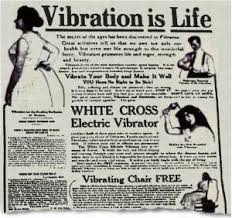
She also brings up the vibrator again, and discusses the way that though many women do like it, it's also more or less the only socially acceptable means of masturbation for women, and she doesn't think that's unrelated to the way that it's seen as really only a substitute for a penis, or even "the imagined male accompanying every dildo" in the eyes of many men (122).
Men's sexual needs, and egos, were still clearly elevated above women's, and Maines wants us to ask ourselves why we think that is- it may be clear, given the history she covered in the rest of the book, why this androcentric model would be put forth, but she wants us to question why we actively participate in its maintenance now, through not being honest in our relationships, or faking orgasms.
She sees us at a point where we have a choice- maintain the model through silence, or talk to our partners, communicate, and address this issue.
I think this is a strong way to end, and in general I thought this was one of her better chapters in awhile. Overall, I think this book provided a lot of interesting and important information, and I only wish that it was less repetitive, and as I've discussed at length in earlier posts, I wish there was greater effort to take into account women's emotional experiences, and emotion in general.
In doing so, she returns to her original idea about the androcentric model in heterosexual relations- that "real sex" is vaginal penetration, male erection, and then male orgasm, and nothing else (116). She talks about how it's only in the 60s that we began even questioning that model, and even as she wrote this, in the 90s, women who admitted to needing clitoral stimulation were still pathologized, and seen as asking too much of their men, inconveniencing them and making their sexual experience less fun because they couldn't "relax" (112, 113, 115).
And pressure was- and is- put on women to fake orgasms, in order to make sure their husband didn't feel badly, with seventy percent of women admitting to faking orgasms regularly, rather than to try to explain to their husbands that they needed other stimulation (117-118). It was to the point that faking orgasm was seen as a "common courtesy" for women to do (119). On the other hand, men are expected by society to be automatically sexually talented, which obviously is a lot of pressure, but it also hurts women, in that men therefore often don't actually want to know the truth about whether their girlfriends are enjoying sex, and therefore don't ask, because they don't want to know, or don't question when it appears that maybe an orgasm wasn't "real" (117). It also results in men blaming women for not orgasming, for insisting that there's something wrong with her, not with his method (117).
She also brings up the vibrator again, and discusses the way that though many women do like it, it's also more or less the only socially acceptable means of masturbation for women, and she doesn't think that's unrelated to the way that it's seen as really only a substitute for a penis, or even "the imagined male accompanying every dildo" in the eyes of many men (122).
Men's sexual needs, and egos, were still clearly elevated above women's, and Maines wants us to ask ourselves why we think that is- it may be clear, given the history she covered in the rest of the book, why this androcentric model would be put forth, but she wants us to question why we actively participate in its maintenance now, through not being honest in our relationships, or faking orgasms.
She sees us at a point where we have a choice- maintain the model through silence, or talk to our partners, communicate, and address this issue.
I think this is a strong way to end, and in general I thought this was one of her better chapters in awhile. Overall, I think this book provided a lot of interesting and important information, and I only wish that it was less repetitive, and as I've discussed at length in earlier posts, I wish there was greater effort to take into account women's emotional experiences, and emotion in general.
Sunday, November 30, 2014
Trans Women and Orgasms
So far, the articles and chapters on women's orgasms that we've reviewed and summarized here have not made a point to take into account trans women's experiences, or acknowledge trans women at all.
Many people assume that trans women have the same experience with orgasm as cis men, but that's just simply not true. Trans women are socialized differently than cis men, have different hormone levels, are treated differently by sexual partners, and sometimes have different parts. In Julia Serano, PhD, 's best selling 2007 book, Whipping Girl: A Transsexual Women on Sexism and the Scapegoating of Femininity, she spends a chapter, entitled "Boygasms and Girlgasms: A Frank Discussion About Hormones and Gender Differences", discussing her experience with orgasm, and what other trans women have experienced with their orgasms. She doesn't claim to represent all trans women, and I do know trans women who have had different experiences than what Serano discusses here, all experiences she discusses are experiences she says she's heard from many trans women, and appear to be common (67). She discusses these experiences within the book's larger argument, that both a biologically deterministic view of gender, and a socially constructionist view of gender, are overly simplistic and flawed. One of her overall arguments, which I highly recommend reading (the book as a whole is super interesting, and discusses things mostly within a cultural and social context, and is less focused on her body, which can be rare given society's obsession with trans bodies), is that there are biological differences between men and women, mostly related to hormones, that socialization exaggerates (74).
 She starts off her chapter by stating that while yes, biological determinism is wrong, the backlash against biological determinism often overemphasizes socialization, and ignores the importance of hormones, though she stresses that hormones are not "on off switch", and that everyone has some of both, in varying levels, on a continuum (66). One of things she talks about, rather tongue-in-cheek, is what hasn't changed since she started taking estrogen and androgen blockers. She cries as much as she used to (although she says her emotions are harder to ignore than they used to be), is still as rational, still has the same tastes in women, food, and culture, and has retained all her skills related to mathematics, science, and reading maps (68, 72). Even before transition, she was never as competitive or aggressive as men were, and remained the same personality-wise after transition (73).
When it comes to sex, however, the hormones changed not everything- her sexual orientation, for example, remained the same- but a lot of things. She reports a sharp decrease in sex drive, with her going from wanting sexual release at least once a day, to only desiring it a few times a week (70). The way she masturbated also changed. While she always preferred erotic stories and fantasies over pictures of naked bodies, the way many women do, she used to prefer "back and forth stroking action", but after she started hormones, and without having had surgery, she began to prefer vibrators (70). With her wife and by herself, she noted that it took her longer to orgasm, but that when an orgasm finally happened, it was much more intense, and diffused throughout her entire body, in a way that pre-hormones orgasms didn't (71). The orgasms are also multiple, when they weren't before, starkly different from each other, when they used to be more or less the same, and are less dependent on anything visual (71). After treatment with hormones, her orgasms and sexual experiences were the same, more or less, as a cis women's. Though Serano does not discuss this, I know trans women whose sexual experiences were like this pre-transition as well, which might complicate this slightly.
What does this tell us about orgasm and gender more generally? Certainly that hormones have a lot to do with the physical mechanics of orgasm, much more so than, perhaps, the actual clitoris itself, or certainly anything vaginal. It also tells us about some of the major differences between orgasms that men have (and non-transitioned women) and orgasms that women have (and non-transitioned men).
Many people assume that trans women have the same experience with orgasm as cis men, but that's just simply not true. Trans women are socialized differently than cis men, have different hormone levels, are treated differently by sexual partners, and sometimes have different parts. In Julia Serano, PhD, 's best selling 2007 book, Whipping Girl: A Transsexual Women on Sexism and the Scapegoating of Femininity, she spends a chapter, entitled "Boygasms and Girlgasms: A Frank Discussion About Hormones and Gender Differences", discussing her experience with orgasm, and what other trans women have experienced with their orgasms. She doesn't claim to represent all trans women, and I do know trans women who have had different experiences than what Serano discusses here, all experiences she discusses are experiences she says she's heard from many trans women, and appear to be common (67). She discusses these experiences within the book's larger argument, that both a biologically deterministic view of gender, and a socially constructionist view of gender, are overly simplistic and flawed. One of her overall arguments, which I highly recommend reading (the book as a whole is super interesting, and discusses things mostly within a cultural and social context, and is less focused on her body, which can be rare given society's obsession with trans bodies), is that there are biological differences between men and women, mostly related to hormones, that socialization exaggerates (74).
When it comes to sex, however, the hormones changed not everything- her sexual orientation, for example, remained the same- but a lot of things. She reports a sharp decrease in sex drive, with her going from wanting sexual release at least once a day, to only desiring it a few times a week (70). The way she masturbated also changed. While she always preferred erotic stories and fantasies over pictures of naked bodies, the way many women do, she used to prefer "back and forth stroking action", but after she started hormones, and without having had surgery, she began to prefer vibrators (70). With her wife and by herself, she noted that it took her longer to orgasm, but that when an orgasm finally happened, it was much more intense, and diffused throughout her entire body, in a way that pre-hormones orgasms didn't (71). The orgasms are also multiple, when they weren't before, starkly different from each other, when they used to be more or less the same, and are less dependent on anything visual (71). After treatment with hormones, her orgasms and sexual experiences were the same, more or less, as a cis women's. Though Serano does not discuss this, I know trans women whose sexual experiences were like this pre-transition as well, which might complicate this slightly.
What does this tell us about orgasm and gender more generally? Certainly that hormones have a lot to do with the physical mechanics of orgasm, much more so than, perhaps, the actual clitoris itself, or certainly anything vaginal. It also tells us about some of the major differences between orgasms that men have (and non-transitioned women) and orgasms that women have (and non-transitioned men).
Friday, November 28, 2014
Lesbians Have Orgasms More Than Straight Women, Bisexual Women May Have Less
In the December, 1994 volume of Off Our Backs, a peer-reviewed journal of contemporary women's issues, a short article, without an author's name attached was published entitled, "Lesbians More Likely to Have Orgasms." More appropriately, it would have been titled "Women Who Have Sex With Women More Likely to Have Orgasms", as it was reporting on the National Lesbian and Bisexual Women's Health Survey, put out by the Lesbian Health Clinic, of lesbian and bisexual women (4). In any case, it was discovered that, using another study that asked heterosexual women about their orgasms, that 65% of lesbian and bisexual women regularly experienced orgasm during sex, compared to 26% of heterosexual women (4).

This actually makes a lot of sense, because we know from previous studies reviewed here, that women are socialized from a young age to put their partner's s pleasure before their own, including sexual pleasure, and we know from Kimmel's chapter on social construction, that socialization has a powerful influence on the way people think about themselves and others, and act. If women consider their partner's sexual pleasure the most important thing, and men are not socialized this way, as been shown in other studies discussed on this blog, then in a heterosexual relationship, it makes sense that women don't orgasm very often. However, when both partners are women and they are both socialized to put the other's sexual pleasure before their own, it's no wonder they both enjoy sex more! (Perhaps to answer Mary D. Pellaneur's question of whether it's men or women who need to change their attitudes about sex- should women care less about men's pleasure? should men care more about women's?- this study would suggest both partners prioritizing the other's pleasure gets good results!) Furthermore, we know from Maines' book that the majority of women cannot orgasm from intercourse alone, and need clitoral stimulation, and sex between women definitely emphasizes the clitoral.
When another study was done twenty years later, in 2014, in the Journal of Sexual Medicine, that compared sexual pleasure between heterosexual, bisexual, and lesbian men and women, and was covered by the Huffington Post by Cavan Sieczkowski, it was discovered that not only were men still more likely to orgasm then women (85% vs. 61%- so the number of even heterosexual women orgasming has increased significantly since 1994!), but lesbians were still more likely to orgasm then heterosexual women- 74% to 61%. The gap is closing, but lesbians still orgasm fairly significantly more often, so the above factors should still be present as well- women are still socialized to prioritize others over themselves, and men are not. A reason why the gap might be closing, is that men might be more encouraged than now than before to take women's needs into consideration, women may be in better places to advocate for themselves more, and also other forms of sexual pleasure might be becoming more popular. (The article is entitled, "Lesbians Are Having More Orgasms Than Straight Women.")
What's different, and interesting, is that bisexual women orgasm only 58% of the time, which is not only lower than the percentage for heterosexual women by just a little bit, but also lower than bisexual women's orgasm rate in 1994, and I can't think of why this is the case.
Any ideas?
Friday, November 21, 2014
Summary: Gerhard on Koedt's Myth of the Vaginal Orgasm
In her article, “Revisiting ‘The Myth of
the Vaginal Orgasm’: The Female Orgasm in American Sexual Thought and Second-Wave
Feminism” published in 2000 in vol. 26 of Feminist
Studies, Jane Gerhard, PhD, describes the trends, conversations, and controversies amongdoctors, psychologists,
and feminists in 20th century America, surrounding women’s orgasms. The titular ‘Myth of the Vaginal Orgasm’ was a
1968 treatise written by Anne Koedt and published by New York Radical Women
(449). An instant success, it argued against the common assertion that women
received intercourse exclusively through intercourse, and explored women’s
sexuality. In Gerhard’s article, she places this piece in its historical
context.

Book by Anne Koedt.
In her first section, “Woman as Vaginal”,
she discusses the beliefs about the orgasm that existed in the first half of
the 20th century. At this time, a “companion marriage” where a
heterosexual couple would love and care for one another, and have sex, was
considered the proper and “normal” thing to do (451). It was agreed upon,
amongst psychologists and sexologists, that intercourse was normal for women,
but most strongly discouraged clitoral stimulation, warning that it would lead
women to reject intercourse, and begin
masturbating (452). As discussed in my other posts, Freud associated the
clitoris with immaturity, and the vagina with maturity in women (452). In the
30s, 40s, and 50s America, his beliefs were solidified, and his followers placed an
emphasis on this that even he did not- in those decades, sexologists strongly
emphasized that naturalness of intercourse and heterosexuality, and the “masculine”
and “immature” nature of the clitoris (454).
His student, Helene Deutsch, especially
argued that female sexuality was rooted in the vagina, and that a normal,
proper woman neither had sex too much or too little, and was subordinate,
passive, dependent, and maternal- a female sexuality rooted in the clitoris,
she argued, is associated with improper sexuality and improper femininity in
general (455-457). A woman, she argued, could adapt to any sexual practice, and
enjoy it- even rape (456). Certainly, no effort should be made to please her. Hischmann and Berger agreed, connecting vaginal
orgasm not only to proper femininity, but heterosexuality as well (459). Thus,
when Koedt and other feminists attacked the “vaginal orgasm”, they were arguing
against not only the idea that orgasms in women were mostly vaginal, but also
the expectations for femininity associated with them.

Helene Deutsch.
Her second section, “Clitoral Visions”,
examines sexual thought, as it pertains to women, from 1953-1966. Kinsey,
Masters, and Johnson all challenged the existence of vaginal orgasm, and argued
for an understanding of sexuality that was based in pleasure, not reproduction-
and thus, they focused on clitoral orgasm (460). They discovered that vaginal
intercourse was not what was most pleasurable for most women, and that in fact,
women behave sexually like men, and enjoy clitoral simulation (461-462). Both
feminists and sex revolutionaries found these findings useful, but feminists
also criticized the sexologists for being focused solely on the body, not on
psychological responses, and being unconcerned with politics, and both criticized
their maintenance of the status quo, as Kinsey, Masters, and Johnson were mostly concerned with improving
marital sex. (461, 463).
Her third section, “The Politics of Sexual
Freedom”, explores sexual thought from 1968-1973, which is the era in which
Koedt wrote her text. Like the sexologists from the earlier period, most sex
revolutionaries emphasized the bodily (464). Much to the frustration of
feminists, and women in general, the “radical” men of this period, looked at
sex in an entirely ungendered way, and put forth an idea of freedom that only
amounted to , “I have the right to have sex with women whenever I want, and
they have the right to have sex with men whenever they want.” (465). There was little to no advocacy for the social or political freedom that was badly needed for
women to truly have a liberated sexuality, and women were subjected to sexism,
objectification, and assault in the pursuit of this particular kind of sexual “freedom”
(465, 468). Black women, and other women
of color, were especially subjected to sexual exploitation and violence, and
they found that many white feminists instead of working with them, were unwilling
to examine these consequences of racism (471).
Feminists in this period, including
Koedt, were part of a productive dialogue, in which “a range of perspectives”
were put forward. They agreed on little, but the conversation had not yet
transformed into the divisive Sex Wars of the 1980s (450). Agreed upon goals
were to emphasize the importance of the clitoris, see women’s sexuality as “female
sexuality”, not heterosexual or homosexual sexuality, and to criticize the two
main constructions of women’s sexuality in a way that would allow for the
development of women's sexual empowerment and agency (451). These two
constructions were the original construction of sexuality, advanced by Freud
and still present, which approved only of sexually passive women, and the
modern construction of sexuality, advanced by the sexual revolutionaries, that
defined women primarily by her sexuality, and expected women to be sexual only
with men (451). Many of these ideas were
originally Koedt’s, or formed with her help, and all are highlighted in the treatise.
Koedt, in her text, emphasizes that these constructions
of female sexuality resulted in women experiencing feelings of guilt, inadequacy,
and shame, and were constantly receiving messages how they should be behaving,
sexually, everywhere, and especially from the therapists who they turned to for
help (459). She advanced the idea that if women were unhappy with their sex
lives, it was not because of anything they were doing or not doing, but because
of sexism, homophobia, and mandatory heterosexuality (466). She wanted women to
be able to “full sexual agents” who could be responsible for their own sexual
pleasure, and she believed that the clitoris was integral here, because anyone,
the woman herself, or a partner of any gender, could pleasure her via the
clitoris (466-467). Feminists in general, in this period emphasized intimacy,
love, psychological pleasure, and lesbianism and bisexuality, as important
components of women’s sexuality (469-471).
Overall, I was really impressed by this
article, which I found through, helpful, and attentive to many other women’s
experiences- unlike in other articles, queer women and women of color are not
ignored, although more attention to Black women’s criticism of not only “radical”
men, but white feminists as well, would have been good, and I am also
interested in how trans women figured into all of this. But as a whole, the argue
provided a good, cursory overview of the period that incorporated multiple
views and experiences.
Friday, November 7, 2014
Orgasm Inc. - Medicalizing Sexual Pleasure
Orgasm Inc., the 2009 documentary, sets out on a journey that explores the intricate industry banking on Female Sexual Dysfunction. It aims to introduce the new gadgets and pharmaceuticals that guarantee sexual fulfillment, while exposing the risks and false communication of research results. This documentary brings together an unexplored market for Big Pharma, cultural gendered norms and women who fall victims of society's mores and customs regarding expression of sexuality.
 |
| Front Cover of Documentary |
An important first question raised by the film is the medicalization of orgasm (or lack thereof) - more specifically, where do we draw the line between normal and abnormal, "healthy" and "diseased. The medicalization of sexual pleasure is based on vague symptoms that are not necessarily signs of a dysfunction, but may be natural, temporary imbalances in the organism. The ability to orgasm is impaired by body image issues, psychological barriers or affections, a history of abuse or stress; moreover, a female's libido may be influenced by relationship problems (such as lack of communication), use of antidepressants or contraceptive pills and hysterectomies. The complex biological and psychological dynamics paint a more nuanced picture than what companies trying to capitalize on sexually-unfulfilled women convey in their black-and-white definitions of what an orgasm is.
 |
| Screenshot from Orgasm Inc. |
Personally, the very definition of this disease is essential, as the construction of the Female Sexual Dysfunction allows companies and practitioners to engage in a battle of leading the development of "cures" and securing a strong market share for such products that claim to dramatically reduce lack of sexual pleasure. The competition for research, FDA approval and release is stiff, as the documentary portrays the efforts of businesses in the field. It is not a surprise that Big Pharma, one of the leading industries of the United States, encourages the aggressive promotion of its cures for sexual dysfunction. The United States are well-known for leading in terms of consumption of prescribed medication, so market estimates for products that guarantee orgasms surely appear optimistic enough for these companies.
Moreover, let's consider the linguistic implications of the Female Sexual Dysfunction. The language employed by companies and advocates of such products is constructed by associating lack of orgasms to a disease, something that is sick in the organism and is in need of a cure. The psychological effect of such language creates fear and confusion around women who are still trying to understand their sexual lives and may not have access to non-biased, accurate information.
 |
| Screenshot from Orgasm Inc. |
One of the experts interviewed, owner of "Good Vibrations" refers to the Female Sexual Dysfunction as the hysteria of our ages. A small historical analysis can point to the early 1900s as one essential moment in the medicalization of the orgasm - the hysteria epidemic (click here for an article on hysteria and the first vibrators).
Subscribe to:
Posts (Atom)